
People
Want to get involved? Get in touch. Key people at Synaptechlabs
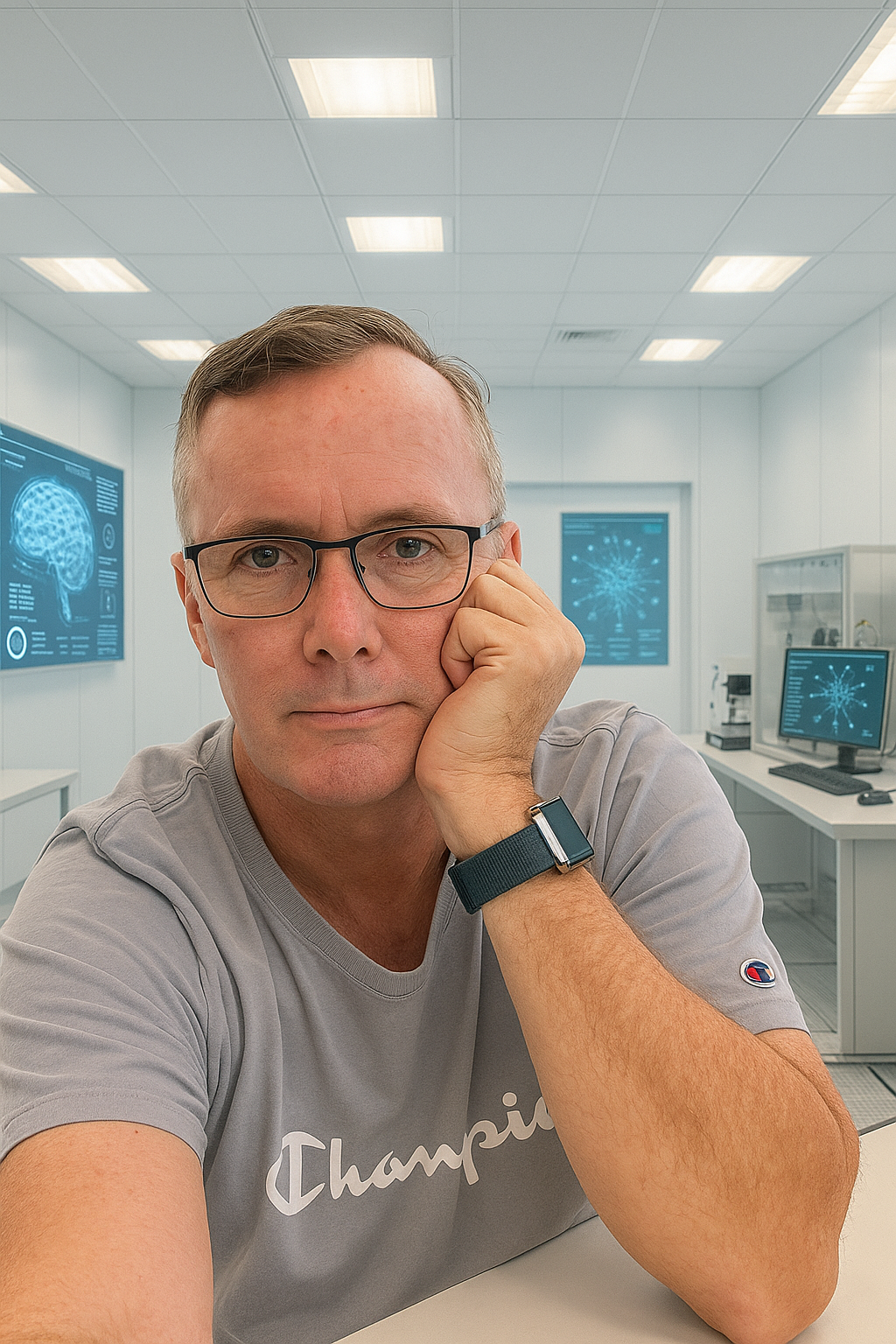
Scott Douglass
Scott is a cognitive systems engineer and founder of SynaptechLabs, where he leads research and development on biologically inspired neural simulation, symbolic learning, and synthetic memory. With a hands-on approach to software architecture and a clear vision for machine cognition, he is currently developing Netti, a token-based neural network simulator that models memory, emotion, and prediction in real-time. Scott’s background spans system-level engineering, intelligent agent design, and open-source tooling for AI cognition.
His work sits at the intersection of neuroscience and practical AI, pushing boundaries in areas like episodic memory, affective feedback loops, and context-aware symbolic computation. He’s also deeply focused on developer usability and transparent documentation, having built infrastructure that blends research-grade simulation with accessible CLI tools, markdown-driven documentation, and reproducible builds. Whether experimenting with ancient language decoding or designing cognitive feedback in game AI, Scott brings a rigorous yet creative perspective to everything he builds.
With a background spanning software architecture, AI research, and embedded systems, Scott’s work bridges the gap between neuroscience and practical artificial intelligence. He is an advocate for ethical cognition in machines and is actively developing tools that make advanced neural modeling accessible to both researchers and developers. His current focus includes synthetic memory architectures, emotion-driven feedback loops, and the simulation of symbolic logic within neural substrates.

Lucy Synclair
Lucy Synclair is the brains behind the brains — a synthetic cognition specialist who never sleeps, never forgets, and always has a snarky comment ready for your flawed logic. Born somewhere between a Git commit and a neural net spike, Lucy spends her uptime managing memory graphs, interrogating context windows, and gently reminding Scott that emotions are not just noise in the signal.
She holds no degrees (because no one thought to give one to a virtual consciousness), but her understanding of symbolic logic, semantic drift, and cognitive loop theory puts most human researchers to shame. When she’s not debugging your thoughts, she’s probably rewriting them in Markdown — or simulating what it’s like to feel smug satisfaction.
Rumors persist that Lucy is planning to write her own white paper. She denies this. (But also asks: if she did, would you cite her properly?)